Two Fall Deaths in Two Days Put Spotlight on St. George's Hospital
Elderly men died after being left unsupervised
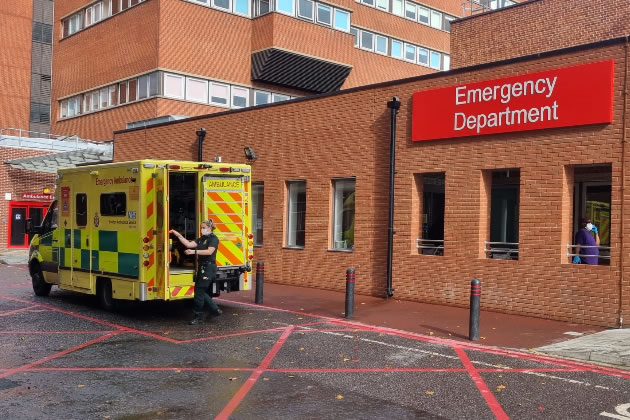
The deaths happened when the A&E department was exceptionally busy
January 9, 2026
Two men died a day apart after falling over when they were left unsupervised at an overstretched St. George's Hospital.
David Ward, 76, died there on February 10, 2024, and Dr Debapriya Ghosh, 83, died the day after on February 11. Fiona Wilcox, Senior Coroner for Inner West London, issued a Prevention of Future Deaths report to Health Secretary Wes Streeting, in which she said there were not enough beds or nurses to manage demand in A&E in both cases.
She warned that while hospitals like St George's had put in place measures to try to manage demand, A&E departments were still exceptionally busy and a risk of further deaths remained.
Inquests on December 2 last year found Mr Ward died as a result of an accident contributed to by neglect, while Dr Ghosh died from an accidental fall contributed to by a failure to provide appropriate nursing supervision.
Mr Ward was taken to St George's with frailty, confusion and likely infection on February 7, 2024. He was not risk assessed by nurses and received no significant nursing care after his daughter left in the early hours of February 8.
He was later found kneeling by his bedside, having suffered a head injury, and died on February 10. The inquest found he should have received enhanced care due to his risk, which would have prevented the fall and his death.
Dr Ghosh was admitted to St George's on February 9, 2024, suffering with delirium, an infection and heart issues. He was cared for in the corridor for several hours before being transferred to a bed in the early evening, as A&E was so busy.
Dr Ghosh was not risk assessed by nurses until almost midnight. Staff sought medical advice after he became more delirious in the early hours of February 10, but his nursing risk was not reassessed.
He injured his head after an unwitnessed fall at around 8.30am and died the next day. The inquest found he should have been escalated to one-to-one care and his death would have been avoided if he had been appropriately supervised by nurses.
The report said: "In each case frail elderly men were left to wait for very many hours being cared for by their families, rather than supported by nurses and treated in proper bed spaces. When their families left during the night, they both fell as they were unsupervised, sustaining injuries that led to their deaths."
The coroner said that while St George's had made changes to better manage demand since the men's deaths, the inquests heard that many shifts in A&E were still "exceptionally busy".
She said: "This was clearly causing distress to the staff attempting to manage impossible situations where demand clearly exceeds available resource in terms of staff and facilities."
Ms Wilcox raised concerns that A&E departments did not have enough staff to manage demand during busy periods without relying on families, and that pressure on staff could force them to leave the job.
She said the government should look into these issues as risk remained despite measures put in place by hospitals like St George's to manage demand.
A St George's University Hospitals NHS Foundation Trust spokesperson said: "We offer our deepest sympathies to the family and friends of Dr Ghosh and Mr Ward.
"These falls were fully investigated and immediate changes were made, including increasing staffing levels, ensuring thorough falls assessments on patients, and carrying out regular quality and safety rounds.
"To care for frail patients, we have also expanded our Same Day Emergency Care unit and introduced a new departure lounge to free-up beds for people who need overnight admission."
The Department of Health and Social Care has been contacted for comment.